
Annual report design:
trends & best practices 2026
Contents
Key annual report design trends defining 2026
Annual report design best practices that still matter in 2026
Why strategic annual report design delivers real business value
Designing annual reports that perform in 2026
Follow us
In 2026, annual report design is no longer about producing static documents to meet compliance requirements. Annual reports have become strategic communication tools that sit at the intersection of brand, performance and trust. Stakeholders now expect clarity, transparency and ease of use – whether they’re reading on screen, in print or somewhere in between.
Today’s annual reports function as investor resources, leadership platforms and digital experiences. That’s why successful reports balance emerging design trends with proven best practices. The goal isn’t to decorate the numbers, but to present complex business information in a way that’s clear, accessible and credible. At The Graphic Design House, we help our clients do exactly that – turning detailed content into design-led communication that works harder for the business.
Key annual report design trends defining 2026
For brands, exhibition stand design isn’t about timber, aluminium or tension fabric systems. It’s about how you show up in a noisy, competitive environment and whether your message gets through.
At its core, exhibition stand design is about communication. You’re asking a lot of your creative in a short space of time: to introduce your brand, explain what you do, highlight why it matters and encourage someone to stop, engage or remember you later.
That means design decisions need to prioritise clarity and hierarchy over decoration. Strong creative doesn’t rely on people already knowing who you are or what you do. It does the hard work for them.
The most effective stands don’t try to be everything at once. They lead with a single idea, supported by confident visuals and messaging that feel consistent with the wider brand. When done well, creative content becomes the differentiator, not the footprint or the budget.
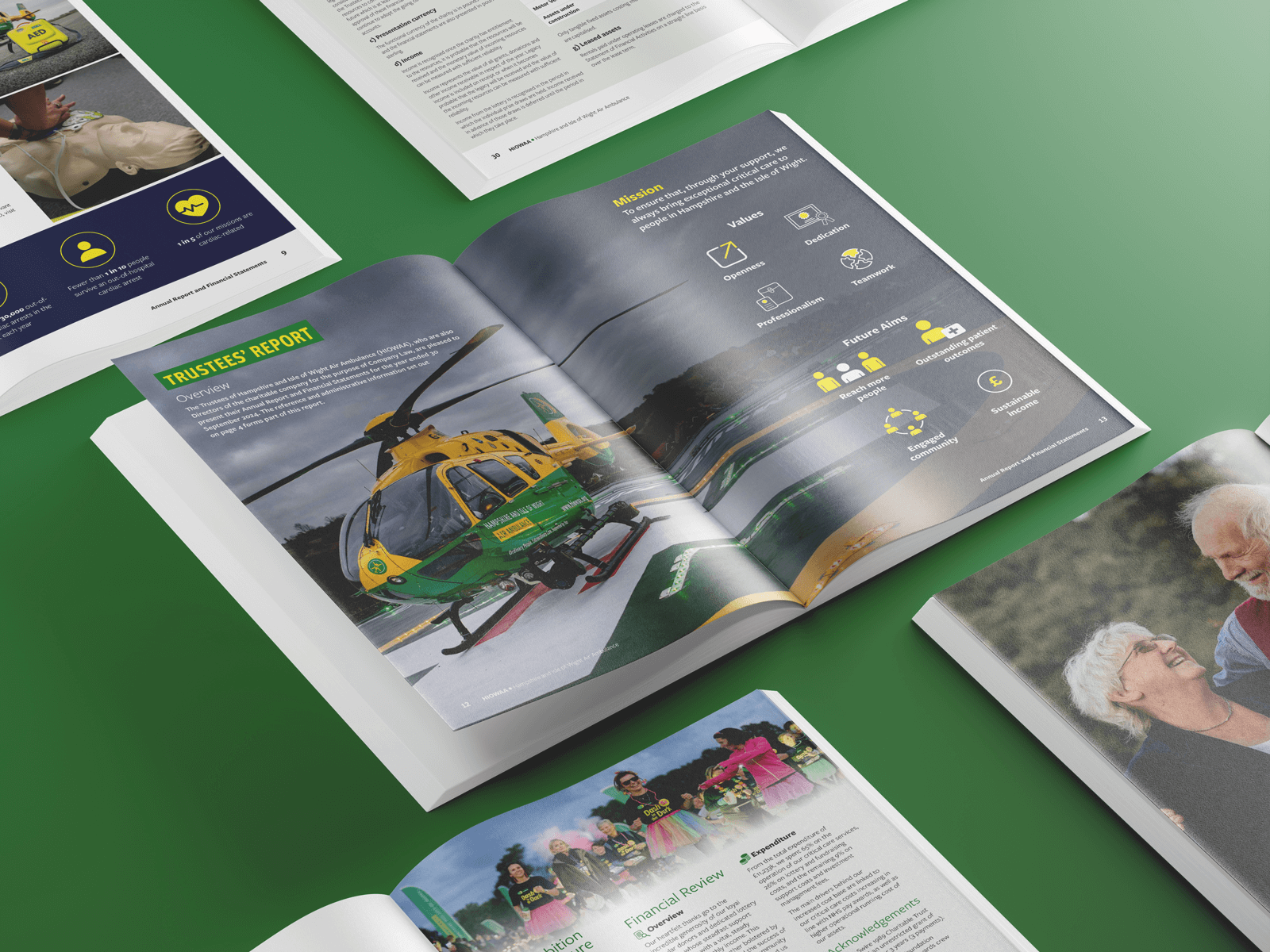
1. Story-first reporting (not data-first)
Annual reports are moving away from dense, number-heavy layouts towards clearer narrative structures. This doesn’t mean removing rigour or simplifying performance, but presenting information in a way that’s easier to follow.
Design plays a supporting role here. Through considered pacing, section breaks and visual hierarchy, layout helps guide readers through the content you’re providing. Leadership messaging, strategic priorities and performance context are easier to absorb when the structure is intentional. The narrative itself remains the client’s, good design simply gives it clarity and flow.
2. Digital-first & interactive reports
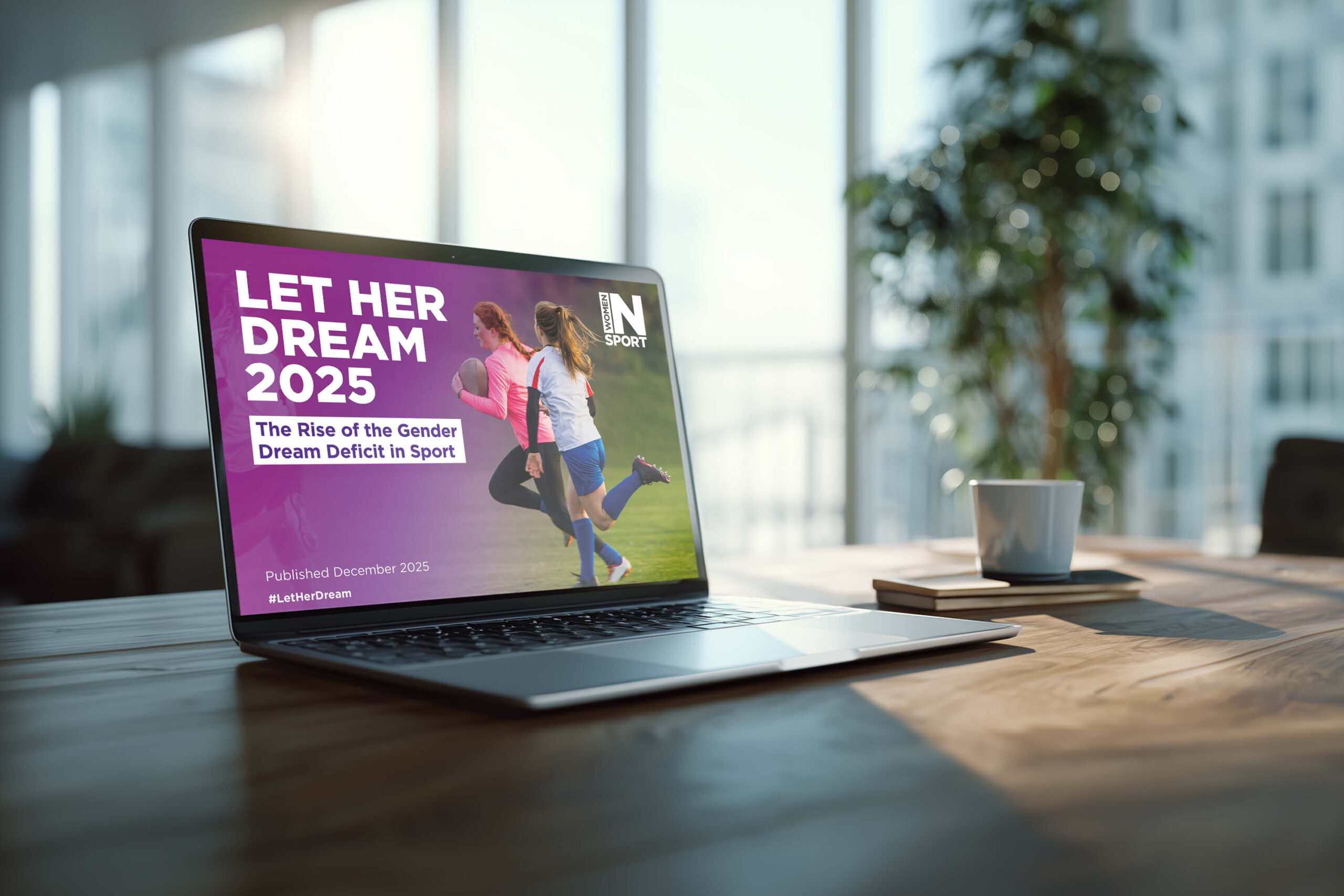
In 2026, most annual reports are designed for screens before print. Scroll-based layouts, clickable contents pages and interactive charts are now expected rather than novel. This approach improves usability and makes long documents less intimidating.
Digital-first design also supports accessibility and wider distribution. Stakeholders can search, share and navigate reports more easily, while organisations gain insight into how content is being used. Print still matters, but it’s increasingly one output within a wider digital system.
3. ESG & sustainability-led visual language
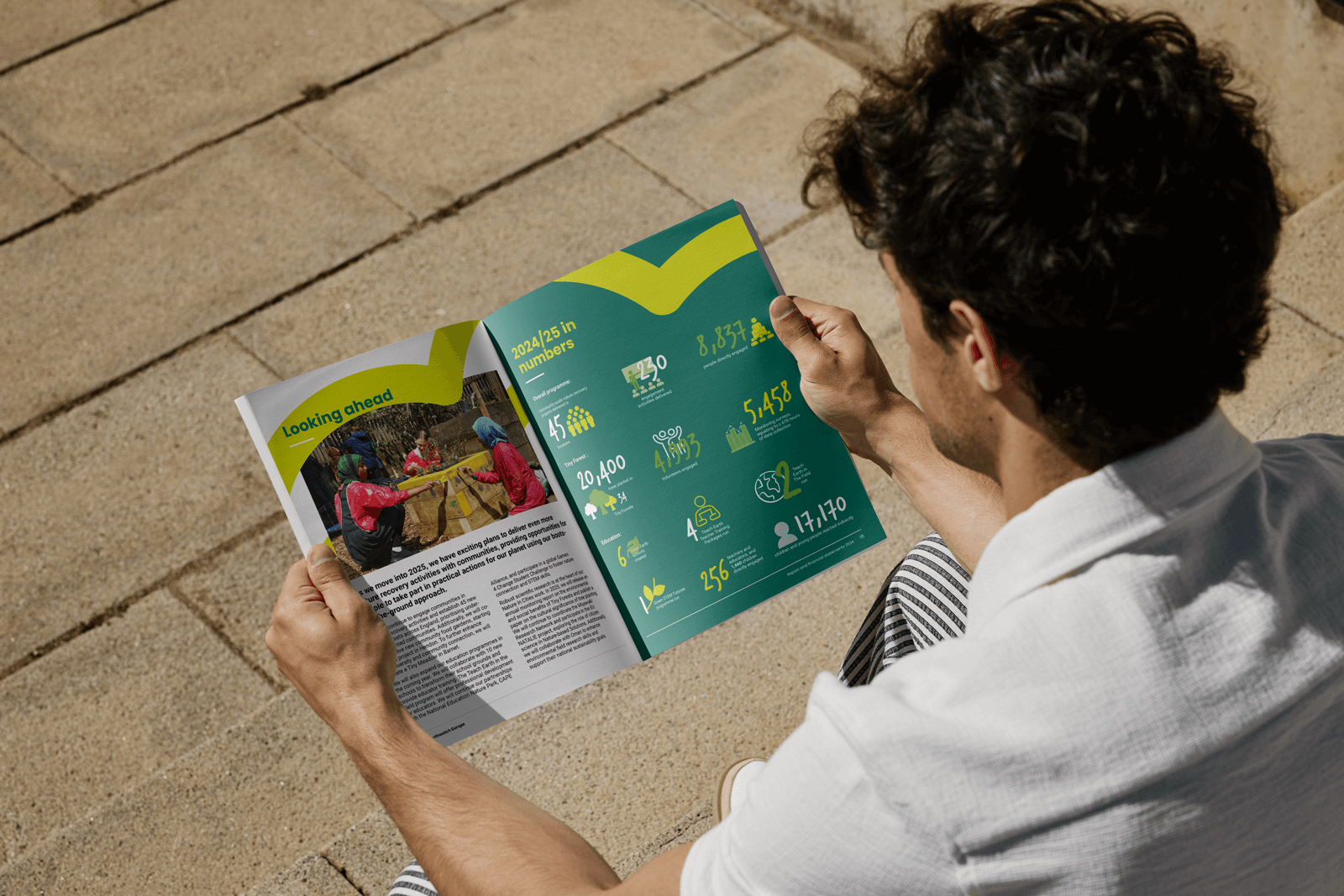
ESG reporting – covering environmental, social and governance performance – is no longer confined to a single section at the back of the report. It’s embedded throughout, from strategy and governance to performance and outlook.
Design helps communicate this integration. Consistent icon systems, clear infographics and restrained colour palettes make ESG information easier to understand without overstating claims. When sustainability reporting is presented clearly and calmly, it supports transparency and builds confidence with investors, employees and regulators alike.
4. Data visualisation with purpose
Fewer, more focused charts and graphs are often more effective. Instead of filling pages with data, a strong annual report design highlights what matters most.
Clear typography, logical grouping and concise annotations help explain what the data means, not just what it shows. This approach reduces cognitive load and helps readers draw accurate conclusions. Decorative graphics are giving way to clean, informative visuals that support understanding.
5. Premium minimalism
Minimalist design continues to define high-quality annual reports in 2026. This isn’t about stripping content back, but giving it room to breathe.
White space, editorial-style layouts and disciplined typography convey confidence and authority. When used well, minimalism signals clarity, control and leadership – qualities that matter deeply in formal reporting environments.
Annual report design best practices that still matter in 2026
While design trends continue to evolve, effective annual report design is still built on a set of core principles. These best practices provide structure and consistency, ensuring reports remain clear, credible and useful, regardless of format or audience. In 2026, they underpin everything from accessibility and brand consistency to how content is navigated and consumed.
Match design with brand strategy
An annual report should feel like a natural extension of your brand. That means consistency across typography, colour, imagery and tone. Design choices should reinforce how your brand presents itself everywhere else, rather than feeling like a one-off exercise.
Design for multiple audiences
Annual reports serve many readers: investors, employees, partners and regulators, all with different needs. Clear navigation and layered content help accommodate this. Executive summaries and visual signposting allow readers to find what’s relevant, while detailed sections remain available for deeper review.
Prioritise accessibility & compliance
Accessibility is fundamental, not optional. Readable font sizes, sufficient contrast, alt text for visuals and a logical reading order are essential – particularly for digital reports. These considerations also support ESG credibility, showing that inclusivity has been built into your communication, not added as an afterthought.
Balance print & digital intelligently
Digital reports offer reach and usability, while print still plays a role in boardrooms, presentations and stakeholder meetings. A hybrid design system allows both formats to coexist without duplication or unnecessary cost. The most effective reports are designed once, then adapted thoughtfully for different outputs.
Why strategic annual report design delivers real business value
Well-designed annual reports do more than present information. They deliver clear benefits, including:
- Support stronger investor confidence by making performance easier to understand.
- Improve stakeholder communication by reducing friction and ambiguity.
- Reinforce brand credibility through consistency and clarity.
- Create long-term value, with content that can be reused across presentations, websites and wider communications throughout the year.
Designing annual reports that perform in 2026
The most effective annual reports in 2026 combine forward-looking design trends with principles that have always mattered: clarity, accessibility and purpose. When design supports, rather than replaces, the overall narrative, reports become tools for understanding and trust.
At The Graphic Design House, we work in partnership with clients to shape annual reports that are clear, confident and fit for modern audiences. If you’re planning your next report and want your design to perform, please get in touch.
More insights
Types of impact reports every organisation should know
Explore the different types of impact reports and how the right design approach improves clarity, credibility and engagement
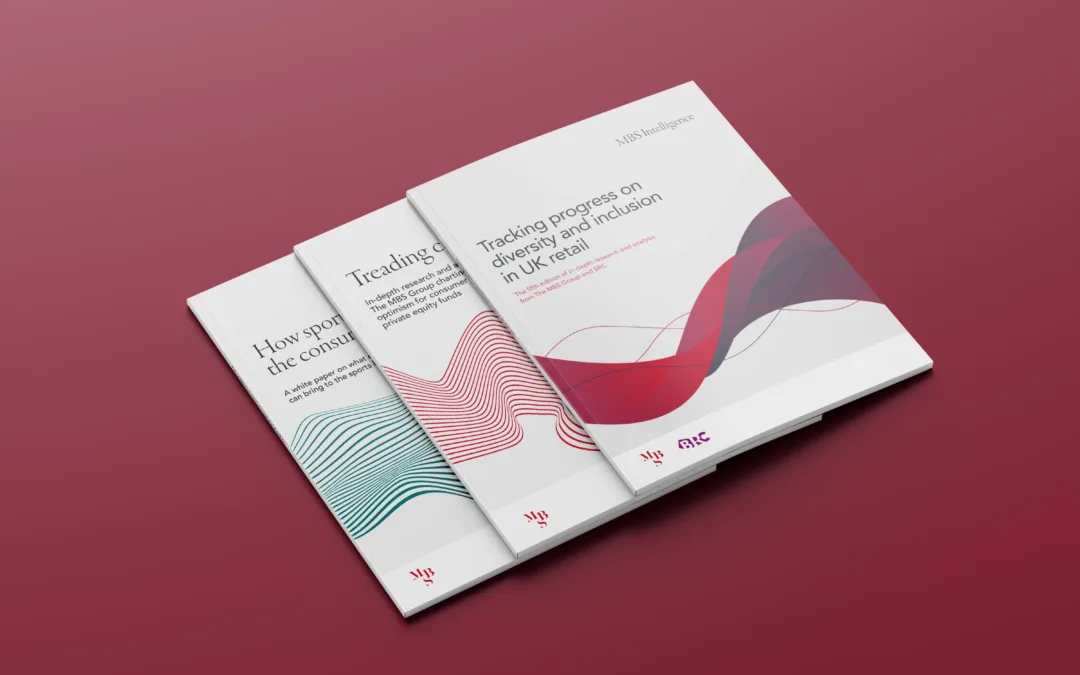
Impact report vs annual report: what’s the difference?
Not sure whether you need an impact report or an annual report? Explore the differences, benefits and design considerations for both.
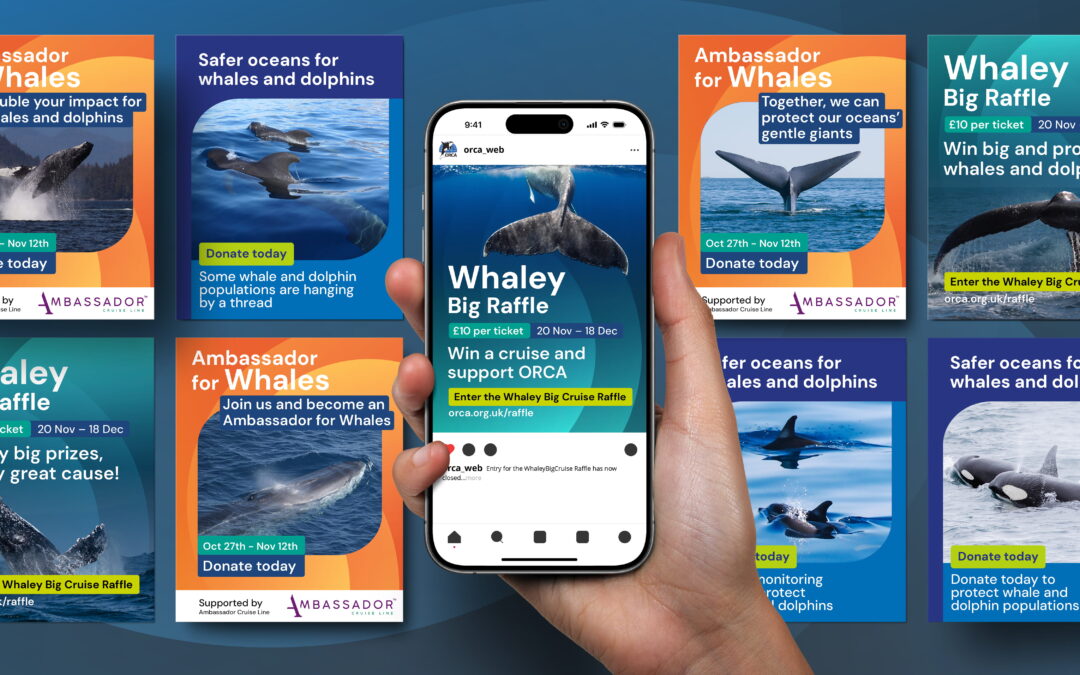
Charity fundraising ideas: how strong branding and design drive greater impact
Discover how strong branding and strategic design turn simple fundraising ideas into powerful charity campaigns that build trust, engagement and donations.